
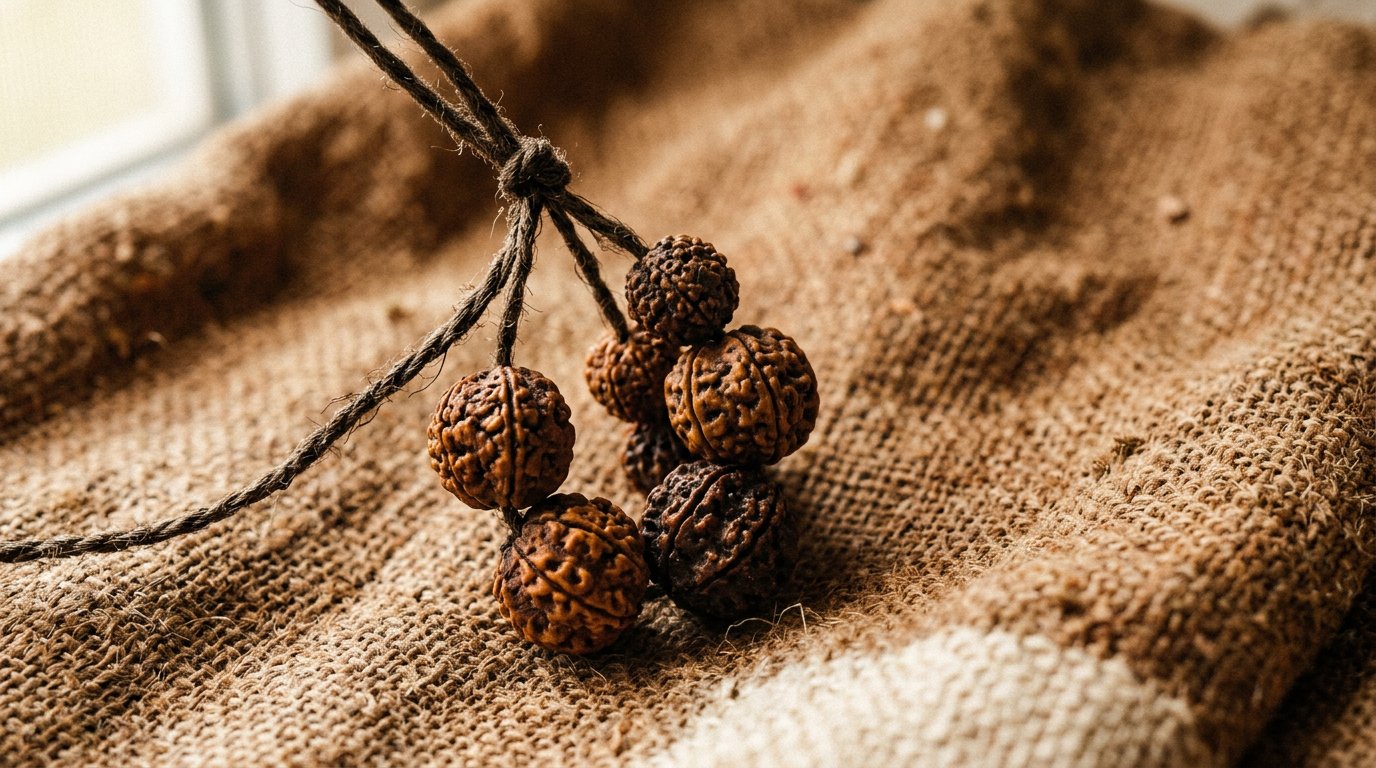
Rudraksha: How to Choose, Wear, and Care for the Right One
I've lost count of how many people ask me about Rudraksha.
They want to know which one to buy, why it's expensive, and why their friend got a different result from theirs. There's a lot of confusion out there.
Let me clear it up in practical terms. Rudraksha is not a magical bead that fixes everything. It's a natural energy tool. Used properly, it can support focus, calm, and resilience. Used blindly, it's just an expensive necklace.
What is Rudraksha?
Rudraksha is a seed from a specific tree found in the Himalayan region and some tropical areas.
In Sanskrit, "Rudra" refers to Lord Shiva, and "aksha" means eye or tear. The name comes from a story about Shiva's tears falling and turning into these seeds.
In Vedic and traditional practice, it's worn for grounding, mental clarity, and spiritual connection.
What are the "mukhis"?
The most important thing people ask is: "Which mukhi (face) should I take?"
The lines on the bead are called mukhis. Each type is linked to a different planet and energy.
Common Rudraksha types
- 1 Mukhi — linked to Shiva, spiritual growth, meditation. Clearance is recommended. Expensive and rare.
- 3 Mukhi — linked to Mars. Good for courage, confidence, and energy.
- 5 Mukhi — linked to Jupiter. The most common and widely recommended. Good for general peace, focus, and balance.
- 6 Mukhi — linked to Venus. Often used for relationships, harmony, and creativity.
- 7 Mukhi — linked to Saturn. Commonly recommended for patience, stability, and career.
- 9 Mukhi — linked to Ketu. Used for spiritual growth, intuition, and releasing fears.
- 11 Mukhi — linked to Hanuman. For courage, protection, and removing obstacles.
The 5 mukhi is the safest starting point for most beginners. It's balanced and widely used.
How to choose the right Rudraksha
Don't choose by price alone. Here's what actually matters.
1. Look for the natural lines
Check that the mukhis are clear, even, and natural. Fakes are often molded or cheap plastic.
2. Check the bead's age
A genuinely old, dense Rudraksha is usually better than a new, light one. Hold it — a good bead feels solid.
3. Look at the color
Rudraksha can be brown, reddish, or yellow. Color isn't the main factor. Quality and mukhi count matter more.
4. Buy from a trusted source
This is the biggest point. Some sellers overcharge and sell fakes. Buy from someone with a genuine tradition, not a random online ad.
5. Consider your need
Are you wearing it for meditation, courage, career, or health? That helps decide whether you need a 5, 6, or 7 mukhi. For most people, 5 mukhi is enough.
Which rashi or planet suits Rudraksha?
A common myth is that everyone should wear Rudraksha as a gemstone for a specific planet.
The truth: Rudraksha is more like a spiritual support than a specific-rashi gemstone.
- 5 mukhi is generally safe for everyone
- 7 mukhi is often suggested for Saturn-related issues
- 3 mukhi or 6 mukhi may be chosen for specific planets
If you're unsure, pick 5 mukhi and don't let anyone talk you into a very expensive 1 or 11 mukhi unless you truly need it and understand it.
How to wear Rudraksha correctly
Here's a simple, practical guide.
1. Choose the right strand
A common way is a 108-bead mala around the neck, or a single bead set in a pendant.
Which is better?
- 108-bead mala — better for daily japa and sustained practice
- Single bead pendant — easier to wear every day under clothes
Both work. Pick based on your lifestyle.
2. Wash before wearing
Wash new beads in clean water. Some practitioners use Ganga water or rose water. Plain water is fine.
3. Wear it on the neck or wrist
Traditionally, Rudraksha is worn around the neck or on the wrist. The neck is most common for a mala.
4. Can everyone wear it?
Generally yes. There's a wide belief that anyone can wear Rudraksha. No specific caste, age, or gender restriction is seen in most modern practice.
5. Remove during unclean situations
Traditional practice often suggests removing it during bathroom use, sleep, or intimate moments. This varies by practitioner. If you wear a necklace to work, a discreet single bead can be kept on.
Caring for your Rudraksha
A Rudraksha is a living natural material. It needs care.
Do's
- Keep it dry when possible
- Clean it every few weeks with clean water
- Let it air-dry naturally
- Store it in a cloth bag or box
Don'ts
- Don't soak it for days
- Don't use harsh soaps or chemicals
- Don't leave it in direct sunlight for long hours
- Don't wear it while applying heavy perfumes, oils, or cosmetics
If your bead turns darker, that's normal. Deep, natural, and often seen as a good sign.
Common mistakes with Rudraksha
1. Buying based on price
Expensive doesn't mean powerful. A genuine 5 mukhi is more useful than a fake 1 mukhi.
2. Wearing more than needed
You don't need five different Rudrakshas for five different problems. More isn't automatically better.
3. Ignoring the source
Fake and artificially molded Rudrakshas are everywhere. Buy from a trustworthy source.
4. Expecting instant change
A Rudraksha isn't a pill. It's a companion for your practice.
5. Wearing it without intention
Wearing it without knowing what it's for won't give you great results. Set a clear purpose.
Real example from my practice
A young man in corporate IT was struggling with constant worry and poor sleep. He asked whether Rudraksha would help.
I suggested a 5 mukhi mala and told him: "Wear it, but also chant five minutes every morning. The bead is a reminder, not a magic fix. Let it remind you to breathe."
He did. The bead helped him build a morning habit. The habit helped him sleep better. It wasn't the bead alone. It was the practice the bead anchored.
FAQ
How do I choose the right Rudraksha?
Look for clear natural mukhi lines, a dense and genuine bead, and buy from a trusted source. Start with a 5 mukhi for general use.
Which Rudraksha should I wear first?
Most people start with a 5 mukhi. It's balanced, widely used, and good for peace, focus, and daily practice.
Can anyone wear Rudraksha?
Yes. In modern practice, anyone can wear it. There's no caste, gender, or age restriction.
Should I remove Rudraksha while sleeping?
Some traditions say yes. If you wear a long necklace, a single bead or a shorter pendant is often more practical for daily wear.
How do I clean my Rudraksha?
Wash it with clean water every few weeks and air-dry it. Avoid harsh soaps and long soaking.
Is a genuine Rudraksha expensive?
Good quality can be pricey, especially rarer mukhis. But a genuine 5 mukhi is more useful than a fake rare one. Don't overpay for a label.
Not sure which Rudraksha fits your purpose? Share your intent with the Bhavishyam team. We'll help you choose a genuine bead and the right way to build a practice around it.
Continue reading: Which Gemstone Is Best for Your Rashi? A Beginner's Guide
Continue reading: How to Chant Mantras Correctly: Rules, Timing, and Benefits