
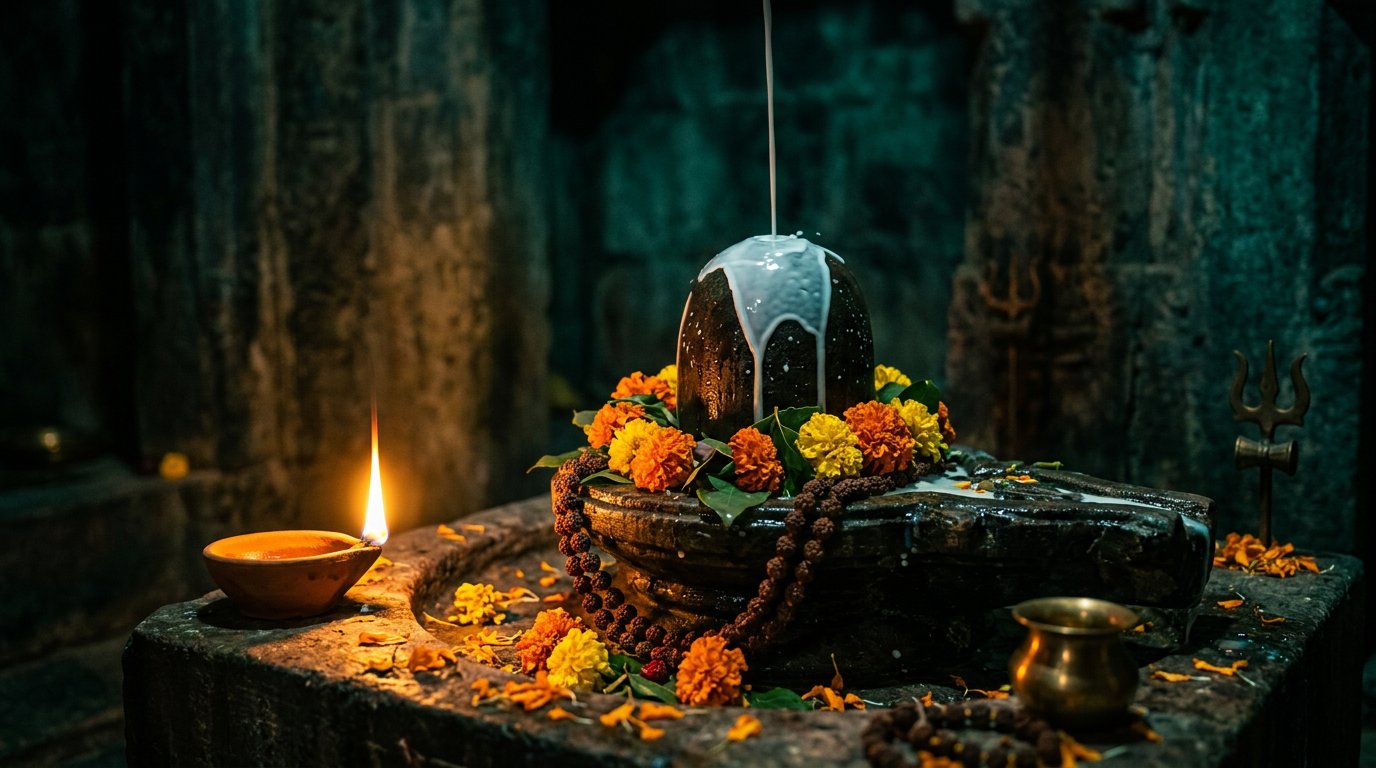
Mahamrityunjaya Mantra: Full Meaning, Benefits, and Correct Method
Out of all the Vedic mantras, the Mahamrityunjaya Mantra gets requested the most.
When someone is sick, scared, or going through a rough phase, this is the one they ask about. It's called the "great death-conquering mantra," and it's deeply respected in Vedic practice.
But it's also one of the most misunderstood. People think it can remove all suffering instantly. That's not how it works.
Let me help you understand it properly — the meaning, the benefits, and the right way to chant it.
What does the Mahamrityunjaya Mantra say?
The mantra is:
Om Tryambakam Yajamahe
Sugandhim Pushti-vardhanam
Urvarukamiva Bandhanan
Mrityor Mukshiya Mamritat
Let me break it down in simple words.
- Tryambakam — "We worship the three-eyed Lord" (a reference to Shiva)
- Yajamahe — "We offer our reverence / we worship"
- Sugandhim — "The one who is fragrant" (pure, full of good energy)
- Pushti-vardhanam — "Who nourishes and increases vitality"
- Urvarukamiva — "Like a cucumber being freed from its vine"
- Bandhanan — "From the bondage / from the fruit's attachment"
- Mrityor Mukshiya — "Release me from death / from fear of death"
- Mamritat — "Grant me immortality / a long, healthy life"
So the essence is:
"We worship the three-eyed Lord, the fragrant one who nourishes us. Like a ripe cucumber naturally falls from the vine, may we be released from bondage and fear, and granted a long, healthy, meaningful life."
It's not a chant for picking a winning lottery number. It's a chant for health, courage, and the release of fear.
What the mantra is really meant for
The traditional context is protection. It's used:
- During illness or recovery
- During fear of any kind
- Before risky travel or major life changes
- As a daily practice for inner strength
- During difficult dashas or transits
In my experience, the greatest value is not that it removes every problem. It's that it helps you stay calm enough to handle the problem.
The benefits people actually feel
Let me be specific about what I've observed.
You won't see all of these instantly. But over time, people commonly report:
- A calmer mind during stressful situations
- Better sleep quality
- Less fear of health-related worries
- A feeling of being "held," even during hard times
- More patience and less panic
- A stronger sense of self and purpose
One woman told me she chanted it before every hospital visit for her mother. She said it didn't stop the illness, but it stopped her from collapsing.
That's the true benefit. It's strength, not a shield against all pain.
How to chant the Mahamrityunjaya Mantra correctly
Here's a simple method that works.
1. Choose a quiet time
Morning is ideal. Evening is also good. Pick one and stick to it.
2. Sit up straight
You don't need a meditation posture. Just sit comfortably with your spine straight.
3. Set a clear intention
Before you begin, say inside your head:
"I am chanting this for strength, health, and peace. For myself and for my family."
4. Chant slowly
Don't rush. Each word deserves a little space.
If you've never chanted it, listen to a few recordings first, then chant along. After a week, the rhythm will feel natural.
5. Start small
Even 11 repetitions is enough. If you want the traditional round, go for 108.
A common practice is to chant it 11 times or 108 times using a rudraksha mala.
6. Close with stillness
After you finish, sit quietly for two or three minutes. Let the sound settle. Don't jump up and check your phone.
When to use the mantra in daily life
Morning practice
Before breakfast, for energy and direction.
During illness
During recovery, for courage and a calm mind. (Not instead of medicine.)
Before hard events
Exams, interviews, surgery prep, or any stressful event.
During tough dashas
Especially useful during Saturn, Rahu, or Ketu phases, when fear tends to spike.
Before sleep
If you wake up anxious, a few slow repetitions can help you drift into a better frame.
Common mistakes
1. Chanting for a magic cure
It's not a replacement for treatment. Use it alongside whatever your doctor recommends.
2. Rushing through it
The mantra is long. If you rush, you lose the rhythm and the focus.
3. Chanting without understanding
You don't need to be a scholar, but knowing the meaning changes the practice. When you understand the words, the practice becomes more than repetition.
4. Expecting immediate perfection
The pronunciation will be rough at first. That's fine. Keep going.
5. Doing it only when scared
If you only chant in panic, you'll link the mantra to panic. Build the habit when things are calm too.
What the mantra can't do
I have to be honest about this as well.
The Mahamrityunjaya Mantra can't:
- Replace medical care
- Bring someone back from serious illness by itself
- Guarantee a specific outcome
- Make you immortal in the literal sense
What it can do is support the person who needs strength. That's real and valuable.
Real example from my practice
A family reached out during a health scare. The father was in the ICU, and the daughter was barely sleeping.
I told her: "Chant it for your father, but understand it's also for you. You need to be steady now."
She started chanting 11 times each morning. It didn't change the hospital's report. It changed her. She became calmer, more present, and able to support her family instead of breaking.
The father recovered. What the mantra gave her was the steadiness to be there for him.
FAQ
What is the Mahamrityunjaya Mantra's meaning?
It's a prayer to Lord Shiva for health, courage, and release from fear. It asks for a long, nourished life and freedom from the bondage of fear.
How many times should I chant it?
11 times is a good start. The traditional count is 108 times with a mala. Consistency matters more than quantity.
Is it safe to chant daily?
Yes. It's considered a generally safe mantra for daily practice.
Can women chant it during periods?
Yes. There's no valid restriction. It's a protective, health-focused mantra and can be chanted by anyone.
What is the best time to chant it?
Early morning is best for daily practice, but you can also chant during illness or stress at any time.
Can it cure disease?
It supports mental strength and calm during health challenges, but it is not a substitute for medical treatment.
Going through a tough health or fear phase? Sing along, chant slowly, and let the Bhavishyam team help you build a simple daily practice that supports strength without taking the place of medical care.
Continue reading: How to Chant Mantras Correctly: Rules, Timing, and Benefits
Continue reading: 9 Powerful Vedic Mantras to Remove Obstacles in Life