
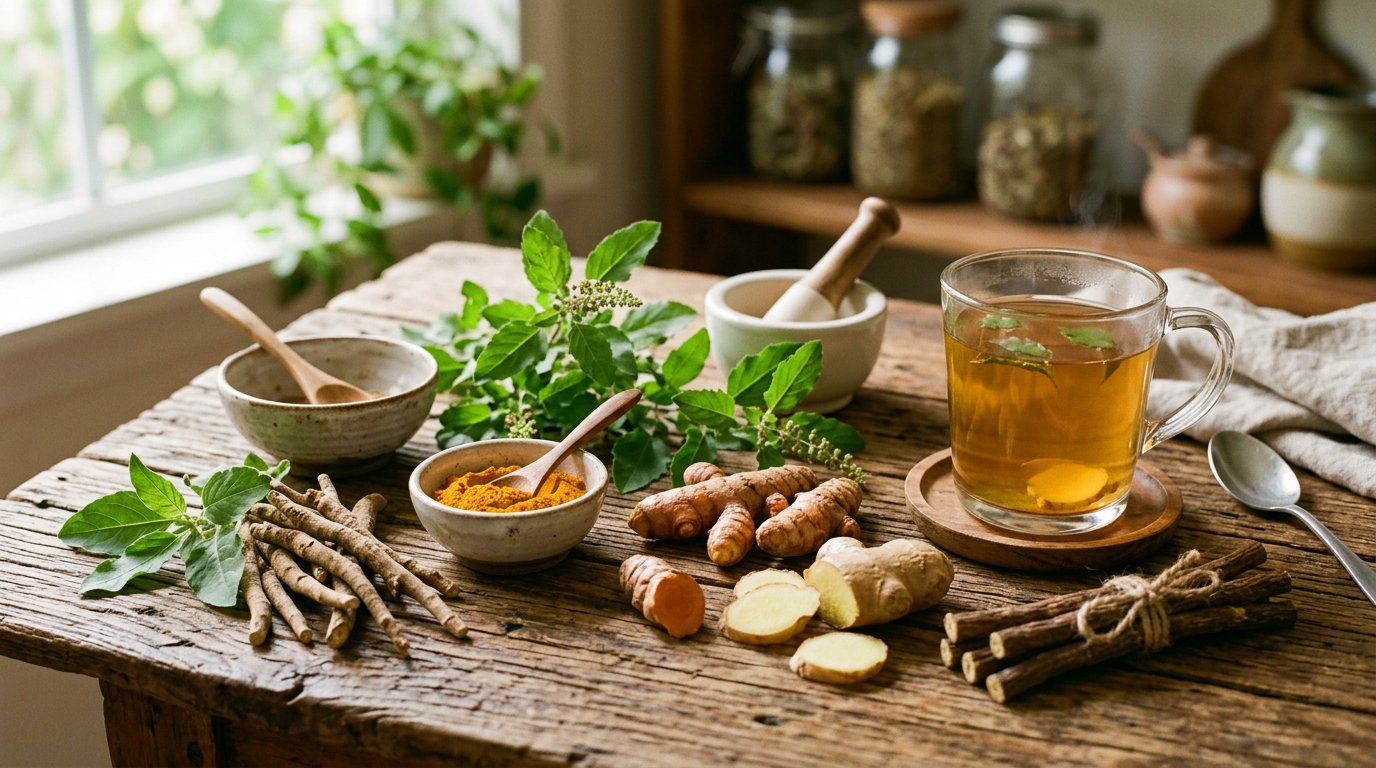
10 Ayurvedic Herbs for Stress, Sleep, and Daily Energy
Ayurveda has always been about catching problems early — before they become disease.
Stress, poor sleep, and low energy are exactly that: early signals. And Ayurvedic herbs are a really useful, gentle way to support yourself before things get worse.
But there's a lot of confusion. Too many people buy a random "immunity tonic" and expect magic. That's not how herbs work.
Let me explain 10 common herbs, what they actually help with, and how to use them sensibly.
First, a note about modern vs traditional use
Some of these herbs have some research behind them. Some are mainly traditional knowledge. That doesn't mean they're useless. It means you should be honest about what they're doing.
Ayurvedic herbs support your system. They don't replace food, sleep, exercise, or medical care. And they can interact with medicines — so check with a doctor if you take regular medication.
1. Ashwagandha
One of the most famous adaptogenic herbs.
What it helps: Stress, fatigue, sleep, and mild anxiety. It's traditionally used to calm the nervous system and support strength.
How to use: Ashwagandha powder with warm milk or water in the evening. Common dose is 1/4 to 1/2 teaspoon. Some people use capsules.
Honest note: It may help with stress-related sleep issues. It doesn't make tiredness vanish if you're not sleeping or eating well.
2. Brahmi (Bacopa)
A famous memory and mental clarity herb.
What it helps: Focus, memory, and mental calm. Useful for students and people who work with their minds.
How to use: Brahmi powder with warm water or as a tea. It's often taken in the morning.
Honest note: It's traditionally used for mental support. Studies are mixed, but it can genuinely help some people with focus.
3. Tulsi (Holy Basil)
Known as the "queen of herbs."
What it helps: Stress, immunity, respiratory comfort, and daily balance.
How to use: Tulsi tea, or fresh leaves in water. Many people chew a few leaves in the morning.
Honest note: Tulsi is gentle and well-loved. It's good for daily support, but it's not a cure for serious illness.
4. Ashwagandha alternative: Shatavari
Often used more for women's health, but also beneficial for energy.
What it helps: Hormonal balance, stress, and reproductive health.
How to use: Shatavari powder with warm milk or water.
Honest note: Many people find it helpful for stress-related fatigue. It's generally gentle.
5. Chamomile
Okay, technically chamomile isn't an Indian Ayurvedic herb, but it's used widely in herbal medicine and fits well here.
What it helps: Sleep, relaxation, and digestion.
How to use: Chamomile tea in the evening.
Honest note: It's gentle, safe, and works well for mild restlessness.
6. Jatamansi
A lesser-known but really useful herb for anxiety and sleep.
What it helps: Calming the mind, sleep support, and reducing mental overactivity.
How to use: Jatamansi powder with warm water or mixed with honey. It's also used in aromatic blends.
Honest note: It's often a replacement for stronger sedatives in traditional use, but it's not a substitute for professional help.
7. Licorice (Yashtimadhu)
A soothing herb for the digestive and respiratory systems.
What it helps: Energy, immunity, throat comfort, and stress-related digestive issues.
How to use: In tea or as a powder. It's often mixed with other herbs.
Honest note: It can raise blood pressure in some people. Use in moderation.
8. Turmeric (Haridra)
A powerful anti-inflammatory herb that also helps with stress.
What it helps: Inflammation, immunity, energy, and overall balance.
How to use: Turmeric in food or as golden milk with black pepper.
Honest note: It's beneficial, but don't depend on it as a cure for serious conditions.
9. Ginger
A classic digestive and energy herb.
What it helps: Digestion, circulation, energy, and cold-relief.
How to use: Ginger tea in the morning, or grated in food.
Honest note: Great for digestion and gut-related fatigue.
10. Triphala
A combination of three fruits, used for centuries in Ayurveda.
What it helps: Digestion, detox, overall gut health, and daily energy.
How to use: Triphala powder with warm water at night.
Honest note: It's gentle and safe for most people, but it's not a laxative substitute for serious digestive issues.
How to choose the right herb for you
Different herbs help different problems.
- Stress + poor sleep — Ashwagandha, Jatamansi, or Brahmi
- Low focus — Brahmi, Tulsi
- Low energy — Ashwagandha, Shatavari, ginger
- Poor digestion — Triphala, ginger, licorice
- General stress support — Tulsi, Turmeric, Ashwagandha
If you're unsure, start with just one. Don't stack five herbs on day one.
How to use herbs correctly
1. Start small
One herb at a time, in a small dose. Give it two or three weeks.
2. Use whole-food or traditional forms
Powders, teas, and fresh herbs are generally easier to trust than mass-produced "miracle supplements."
3. Pair with lifestyle
No herb will fix sleep if you're scrolling all night. No herb will fix stress if you're overcommitting.
4. Check for interactions
If you're on blood pressure, diabetes, thyroid, or other medication, talk to a qualified professional first.
5. Be patient
Herbs work slowly. Some people feel a change in a week. Others need a month.
What herbs can't do
Let me be clear about this.
They can't:
- Replace sleep, food, or exercise
- Cure serious medical conditions
- Replace therapy, medication, or a doctor's care
- Work if you're taking them inconsistently
They can:
- Support your nervous system
- Help you sleep better
- Improve digestion and energy
- Make a lifestyle change easier
Real example from my practice
A man in IT was exhausted all the time. He was working 12 hours a day, skipping lunch, and sleeping badly. He wanted a herb that would give him energy.
I told him: "The herb is the last thing you need. Eat at 1 PM, stop working at 8 PM, sleep before midnight. Then add ashwagandha in the evening."
He was resistant at first. But when he fixed the basics, the ashwagandha actually worked. Before that, it was just an expensive cup of powder in a tired body.
FAQ
What is the best Ayurvedic herb for stress?
Ashwagandha and Brahmi are commonly recommended for stress. Tulsi is also excellent for daily stress support.
Can I take Ayurvedic herbs daily?
Many can, but it's best to start small and use them consistently. Don't take large doses without professional guidance.
Which herb is best for sleep?
Ashwagandha, Jatamansi, and chamomile are commonly used for sleep support. Combined with a regular bedtime, they're often helpful.
Are Ayurvedic herbs safe for everyone?
Not always. Some herbs interact with medications and conditions. Always check with a qualified practitioner if you have an ongoing health issue.
How long do herbs take to work?
Usually about 2–4 weeks of regular use. It's a slow support system, not a quick fix.
Want an Ayurvedic routine that fits your body and life? The Bhavishyam team can help you choose simple herbs and pair them with practical daily habits — without pushing expensive products.
Explore: Bhavishyam main services & guidance →
Explore: Bhavishyam main services & guidance →